Otoplasty for Adults and Children: What Can Ear Surgery Change?
Prominent ears are often described as though they were all the same, but their shape can differ for several anatomical reasons.
The fold inside the upper ear may be poorly defined, the central bowl of cartilage may be relatively deep, or the angle between the ear and the side of the head may be greater than usual. One ear can also differ from the other.
Otoplasty is planned around these structural features. Its purpose is not to give every patient identical ears, but to adjust shape, position or proportion while preserving an ear that looks natural for that individual.
Otoplasty changes cartilage, not hearing
Cosmetic otoplasty primarily addresses the external ear cartilage.
It may be considered when one or both ears project prominently, when certain folds are underdeveloped or when a previous ear operation has produced an unsatisfactory position or contour.
Prominence itself is generally not a hearing problem. Moving the outer ear closer to the head is therefore intended to change appearance and proportion rather than improve hearing.
A separate medical evaluation is appropriate when the concern involves hearing, recurring infection, pain or another ear symptom.
Different shapes require different corrections
The visible ear has several curves and depressions that contribute to its overall form.
In some patients, creating or strengthening the antihelical fold is central to the plan. In others, the size or orientation of the conchal bowl contributes more to projection. These features can occur together and can differ between the right and left sides.
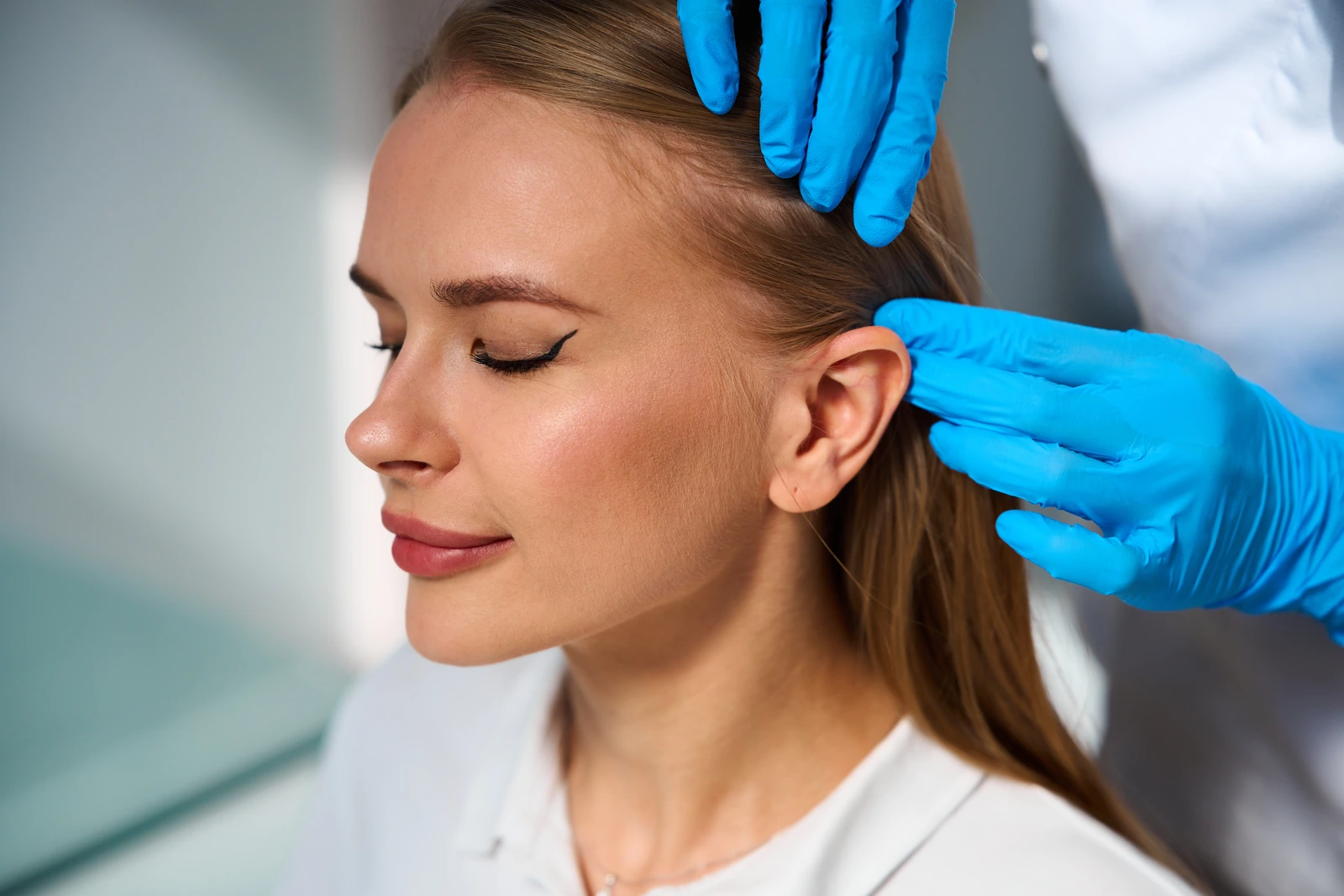
The surgeon therefore examines the ear from the front, side and back. Simply pulling both ears toward the head by the same amount would not account for these differences and could create an overcorrected appearance.
Perfect symmetry is not a realistic goal. Human ears normally differ, and surgery cannot remove every difference between them.
When can otoplasty be considered for a child?
Ear cartilage develops early enough that otoplasty may be discussed during childhood, but anatomy is only one part of the decision.
The child should be healthy, able to cooperate with postoperative care and capable of expressing how they feel about the operation. A child who consistently objects or cannot participate in the discussion should not be treated as though the decision belonged only to adults.
Parents may be concerned about teasing, but surgery should not be presented as the only way for a child to feel accepted. The child’s own experience, maturity and willingness matter.
Timing is individualized rather than determined by one mandatory birthday.
Teenagers and adults can also have otoplasty
There is no requirement that prominent ears be corrected in childhood.
Some people are not troubled by their ears until adolescence or adulthood. Others considered surgery earlier but preferred to wait until they could make the decision independently.
Adult cartilage may behave differently from a young child’s cartilage, and prior injury or surgery can affect planning. Nevertheless, the same central questions apply: what feature is causing the concern, what change is realistic and what scar and recovery are involved?
An adult should pursue otoplasty for their own reasons rather than to satisfy another person’s preference.
Where are otoplasty scars located?
Incisions are often placed on the back of the ear, although some corrections may require access through natural folds on the front.
Their position depends on the technique and anatomy. A scar may be relatively concealed by the ear’s location, but it is still permanent and can heal differently from one person to another.
Internal sutures may be used to help shape or support cartilage. The exact method should not be assumed before an examination, because the operation needs to match the structural cause of prominence.
Recovery involves protecting the new position
Swelling, bruising and temporary sensitivity can occur after ear surgery. Dressings or a supportive band may be part of the surgeon’s postoperative instructions.
The ears also need protection from pressure, friction and accidental impact while early healing takes place. This is particularly relevant for children returning to active play and for adults whose work requires helmets, headsets or other equipment around the ears.
The timing of school, work, exercise and sports should be discussed individually rather than based on a universal online schedule.
What otoplasty cannot promise
Otoplasty cannot guarantee perfectly matched ears or eliminate all visible irregularity.
Cartilage has its own shape and mechanical behaviour, and some degree of recurrence or asymmetry can occur. Infection, bleeding, wound problems, changes in sensation, unfavourable scarring and the possible need for another procedure belong to the informed-consent discussion.
The objective is a proportionate improvement, not an ear pressed unnaturally flat against the head.
Otoplasty consultation in Longueuil
Dr Alain Gagnon evaluates children, teenagers and adults considering otoplasty in Longueuil and Montréal’s South Shore.
The consultation can identify which cartilage features contribute to the concern and discuss the likely incisions, limitations and recovery needs.
If prominent or asymmetrical ears are a concern for you or your child, request an otoplasty consultation to discuss the decision without pressure.
(514) 768-7906
550 chemin Chambly, Bureau 330, Longueuil, QC, J4H 3L8