
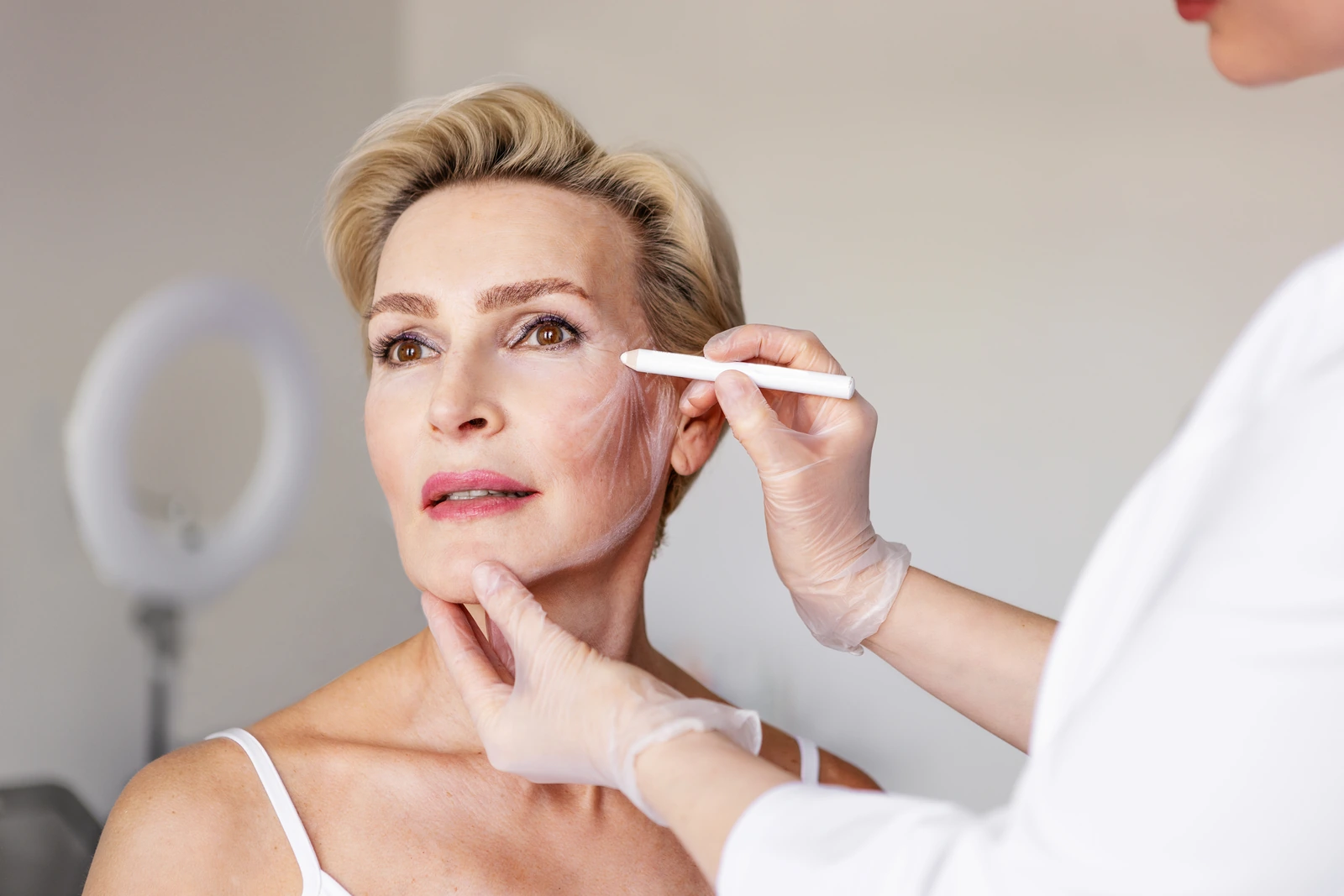
Facelift Recovery: Swelling, Healing and Planning for Social Downtime
Facelift recovery is visible in a way that recovery beneath clothing may not be.
Swelling, bruising and incision changes occur around the face, ears and hairline, so patients often want to know exactly when they will look ready for work, an event or photographs.
No calendar can predict that day for everyone. The extent of surgery, individual healing, combined procedures and a person’s comfort with visible swelling all affect what “socially ready” means.
The early appearance is not the result
Immediately after a facelift, tissues have been repositioned and incisions have just begun to heal.
A dressing may be placed around parts of the face, and some operations involve temporary drains. Swelling and bruising can make the face look fuller, uneven or less familiar than expected.
One side may swell differently from the other. This does not automatically mean the eventual result will be asymmetrical.
Judging the outcome during this stage can create unnecessary anxiety because the tissues have not settled.
Tightness and altered sensation can occur
Patients may notice tightness through the lower face or neck, along with numbness or unusual skin sensations near the incisions.
These experiences can change as swelling decreases and small sensory nerves recover. Sensation does not follow an identical timeline in every person, and some changes may persist.
The face should not be stretched, massaged or treated based on generic online advice. Any permitted movement, skincare or massage needs to follow the instructions for the actual procedure performed.
Incisions continue changing for months
Facelift incisions are commonly placed around the ear and may extend into the hair-bearing scalp or beneath the chin depending on the plan.
They can initially appear pink, firm or more noticeable. Scar maturation is gradual, and hair length, hairstyle and individual healing influence how easily incisions are concealed.
Patients should ask when it is appropriate to wash and style their hair, use makeup or resume hair colouring. Products that seem routine can irritate healing incisions if used too early.
No scar can be promised to become invisible.
Social downtime differs from medical recovery
Being medically well enough for light daily activity is not the same as feeling comfortable at a meeting or social event.
Someone working from home may resume selected tasks while bruising remains visible. Another person may prefer to wait longer because their role is public-facing. Makeup can sometimes camouflage colour changes after the surgeon permits its use, but it does not remove swelling.
Important events should not be scheduled around the shortest recovery estimate found online. Allowing flexibility is more realistic than relying on one exact date.
Combined procedures can change the experience
A facelift may be performed alone or together with another procedure such as blepharoplasty.
When the eyelids, brow, neck or another area are also treated, swelling patterns and care instructions can differ. The recovery for one operation should not be copied onto a combined plan.
Health, nicotine exposure, prior facial surgery and the extent of tissue repositioning may also affect healing.
This is why a personalized recovery discussion belongs in the consultation before a date is chosen.
Recovery includes more than appearance
Transportation, help at home and a comfortable place to rest should be arranged in advance.
Patients may have temporary limits on driving, exercise, lifting and other activities. The exact restrictions need to come from the surgical team and may change at follow-up visits.
Questions worth asking include:
- Will I have a dressing or drains?
- When can I wash my hair and face?
- When may makeup be applied near the incisions?
- What sleeping position is recommended?
- When can I drive and exercise?
- Which symptoms require an urgent call?
Written instructions are more useful than trying to remember every detail immediately after surgery.
Know when to contact the team
Some swelling, bruising and discomfort are expected, but not every postoperative change should be watched at home without advice.
Rapidly increasing swelling, significant one-sided tension, bleeding, worsening pain, breathing difficulty, fever or concerning changes around an incision deserve prompt communication with the surgical team or emergency assessment as directed.
Patients should receive procedure-specific contact instructions before leaving the surgical facility.
Facelift recovery in Longueuil
Dr Alain Gagnon discusses facelift recovery with patients from Longueuil and Montréal’s South Shore as part of preoperative planning and follow-up.
The expected course depends on the exact operation, so work, caregiving and important social commitments should be planned around individualized guidance.
If you are considering a facelift, request a consultation to discuss the operation and build a realistic recovery plan around your responsibilities.
(514) 768-7906
550 chemin Chambly, Bureau 330, Longueuil, QC, J4H 3L8