Blepharoplasty in Longueuil: Under-Eye Bags, Heavy Eyelids and a Tired Appearance
People considering eyelid surgery often describe the problem in emotional rather than anatomical terms: “I look tired even when I’m not.”
That description can be accurate, but the reason behind it matters.
A heavy upper eyelid is different from a prominent lower-eyelid bag. A hollow beneath the eye is different again. Although these changes can all affect how rested the face appears, blepharoplasty does not address them in exactly the same way.
The first step is understanding what has actually changed around the eyes.
Why upper eyelids become heavier
The upper eyelid contains extremely thin skin and several delicate underlying structures.
With age, excess skin may become more apparent and the upper-eyelid crease can change. Genetics also play a substantial role, which is why some people develop heavier-looking eyelids earlier than others.
Upper blepharoplasty generally focuses on carefully addressing excess tissue while preserving the anatomy required for normal eyelid function.
The objective is not simply to remove as much skin as possible. Overcorrection around the eye can create its own functional and aesthetic problems.
Under-eye bags are not simply loose skin
Lower-eyelid ageing is more complex than it may appear.
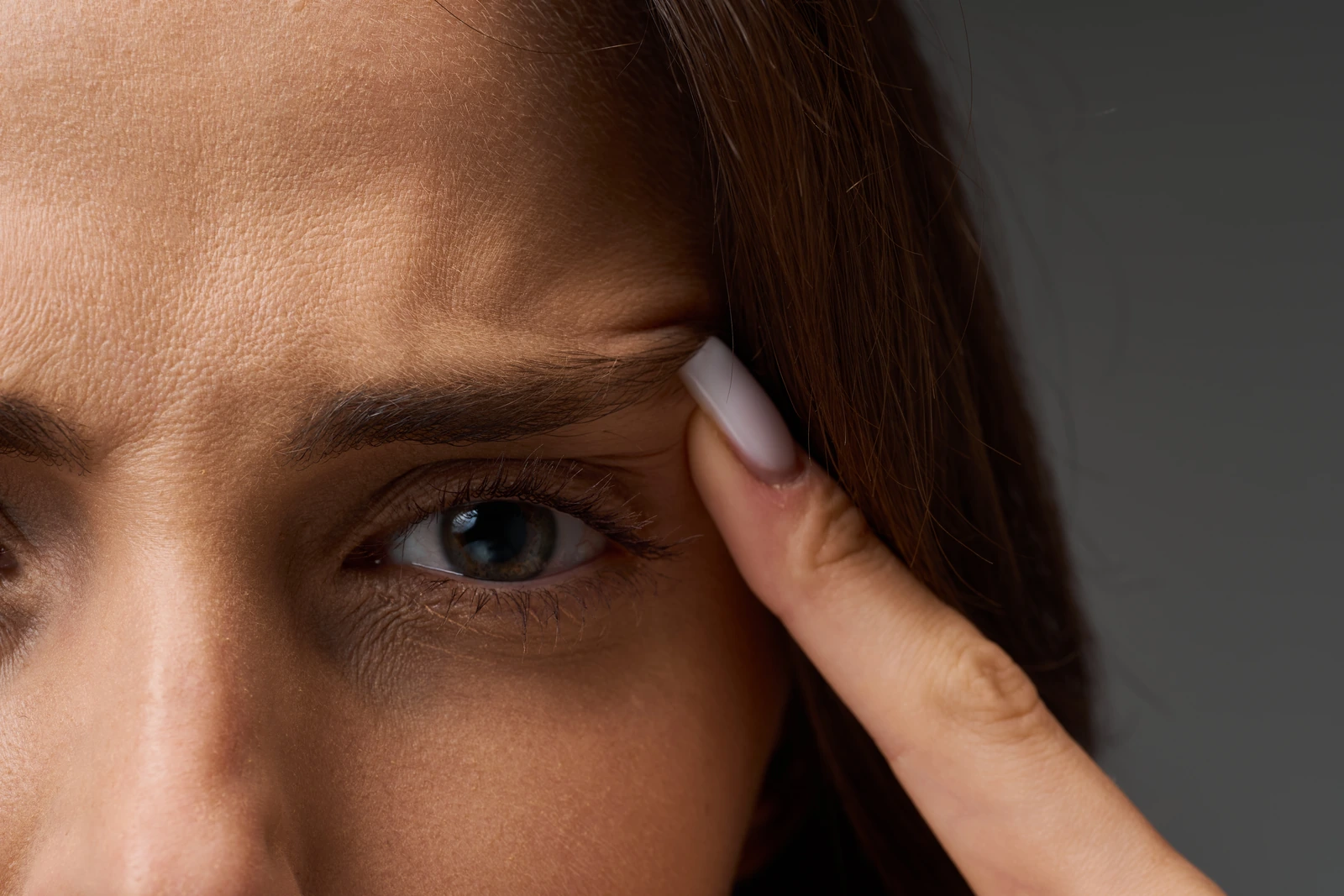
The fullness commonly described as an “eye bag” can involve fat that has become more prominent. Skin laxity and changes in the support of the lower eyelid may also contribute.
This distinction matters because simply removing surface skin does not necessarily address the underlying contour.
The relationship between the lower eyelid and the cheek is also important. A visible depression immediately beneath a prominent bag can make the contrast appear stronger.
For this reason, lower-eyelid surgery requires careful assessment of both fullness and surrounding anatomy.
What about dark circles?
Dark circles are a good example of a concern that should not automatically be equated with eyelid surgery.
Shadowing caused by the contour beneath the eye may improve when that contour is addressed. Pigmentation, very thin skin or visible blood vessels, however, involve different mechanisms.
A blepharoplasty should therefore not be expected to eliminate every type of dark circle.
Knowing whether the concern is primarily structural or related to skin quality helps determine what surgery can realistically change.
Will blepharoplasty change the shape of the eyes?
The goal of conservative eyelid surgery is generally to improve the specific anatomical concern while respecting the patient’s existing features.
Eyelid position, eye shape, brow position and facial proportions are interconnected. This is one reason why photographs of another person’s eyelid result cannot simply be reproduced on a different face.
Some patients primarily need upper-eyelid treatment. Others are concerned with the lower lids, while certain patients may consider both.
The eyebrows can influence what looks like an eyelid problem
Not all apparent upper-eyelid heaviness originates from the eyelid itself.
If the brow has descended, particularly toward its outer portion, it can contribute additional tissue above the eye and make the upper lid appear heavier.
Removing eyelid skin does not reposition the brow.
Distinguishing between these two components is important before deciding which procedure best corresponds to the patient’s concern.
Recovery is visible because the eyes are visible
The eyelids are highly vascular tissues, so swelling and bruising can be noticeable after surgery.
The early postoperative appearance should not be confused with the eventual result. Swelling evolves over time, and scars also mature progressively.
Because the eyes occupy such a central position on the face, even relatively modest swelling may seem significant during the initial recovery period.
Patients should account for this when planning work and social activities.
Blepharoplasty on Montréal’s South Shore
Eyelid surgery is most useful when the treatment matches the anatomy responsible for the concern.
Dr Alain Gagnon sees patients from Longueuil, Brossard, Saint-Lambert, Boucherville, Saint-Bruno and other South Shore communities who are considering upper or lower blepharoplasty.
An assessment can distinguish excess upper-eyelid skin, lower-eyelid bags, brow position and other features that may contribute to a tired appearance.
If your eyes appear persistently tired or your eyelids have changed with time, a consultation in Longueuil can help determine whether blepharoplasty addresses the underlying issue.
(514) 768-7906
550 chemin Chambly, Bureau 330, Longueuil, QC, J4H 3L8